Soft Animal
It is like a sinkhole, the conversation in the windowless room. A sinkhole right in the centre of my chest, except it’s skin sliding, not land, not dust, but skin and bone and blood, curving into the cavities of me.
It is like papier mâché on top of a balloon, the conversation about kindness and cruelty, in the windowless room. It is like papier mâché on top of a balloon, only, beneath the hard shell, the balloon has been popped, and it’s shrivelled up, against the walls, shrivelled up, but the shell still stands, though there’s nothing inside, the shell still stands.
You do not have to be good
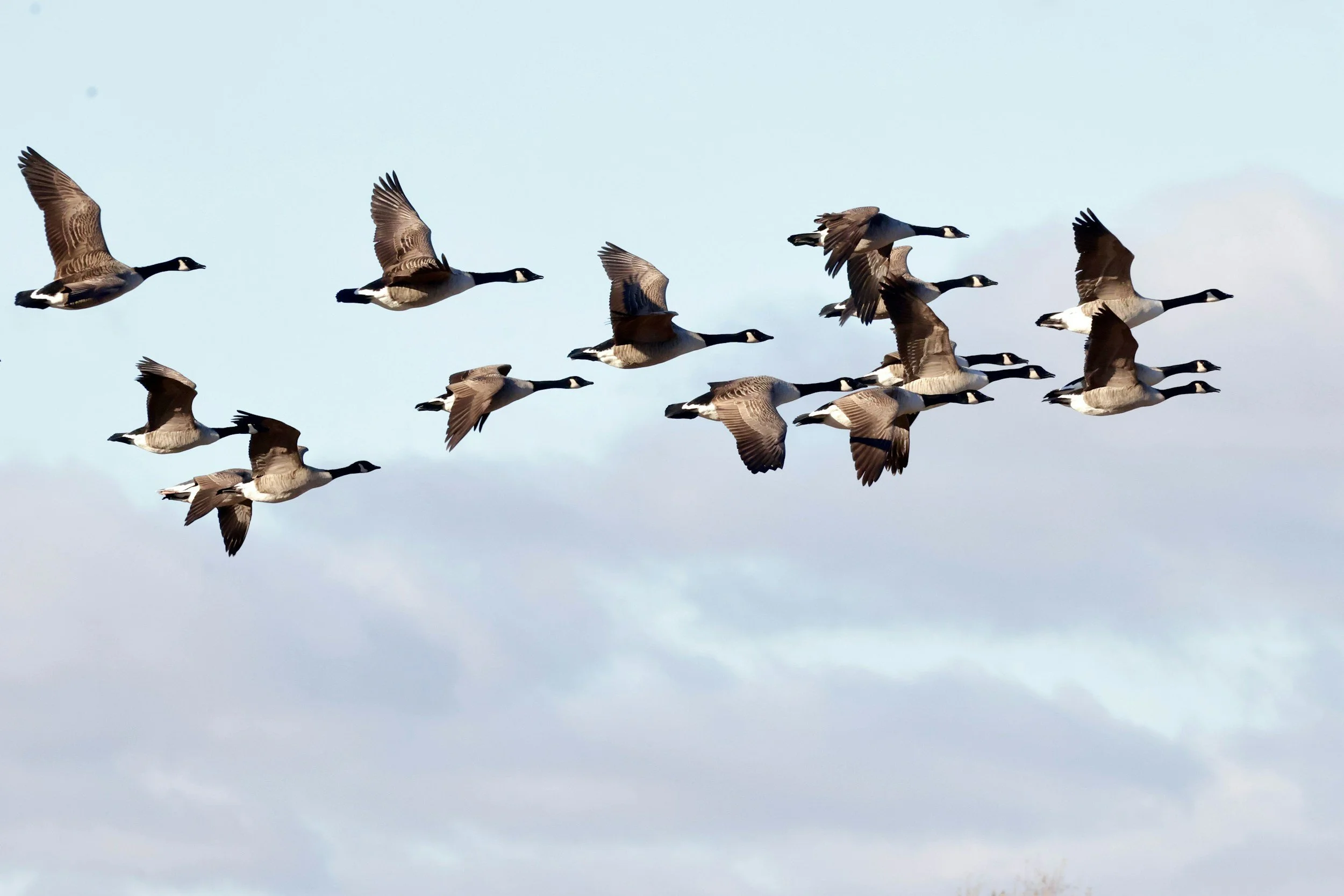
When I am twenty-eight and walking in the gardens (circling and thinking and walking), I come across a group of geese, flocked together in the shallows of a pond. They have feathers the colour of loose-soil, and stretched black necks, curved like question marks. Their white chin straps move like saddle shoes, black beaks a mid-step high heel. Frondlike feet meet reflections in the water, so it seems there are hundreds of them, together, preening and nestling and stretching out their wings in great arcs.
There is a poem about geese.
A poem that, since reading it, has found a home in the wet crawlspace beneath my tongue. It comes to me, again, as I walk, punctuating my steps.
You do not have to walk on your knees
A goose does not need to think about goodness. A goose thinks about honking and hissing and flapping its wings and digging through dirt and grain and drinking from shallow water. But I have always been good. Good like the clothes worn to church on Sunday. Good like a loping dog with a stick, ruff ruff. Good like a sheet with no stains. That sort of good.
(I am seven and wetting myself on the classroom floor because the thought of speaking out steals my voice from my throat, nor do I say anything once it has happened. I sit there, in my own warmth, a melted sun, until the bell has rung. I walk out of the class, sweatshirt tied around my waist, horse-blinder guilt at the corners of my eyes, pulsing)
(I am fifteen and my friends laugh at me for thinking a blown-up condom we find in a bin is just a balloon. They laugh and I feel as though I have been wedged between two slides of a microscope, face pressed against glass, one slide slipping out from beneath the other. Later, later, when we play Never have I Ever, fingers lower at get drunk and have sex and smoked weed, and my fingers remain upright, having not so much as brushed hands with a boy let alone lips, let alone skin, let alone, alone -)
(I am seventeen and starting university and every person seems to be fully printed rather than half-inked, not recreating themselves every time they meet someone else, not inhaling other opinions and making them their own. And they drink without fear. They fit too many people into cars and ride around parking lots on shopping trolleys and go out to clubs where the music is loud, and life is loud, and they touch one another without shame -)
(But fear is the sky I was born beneath. Shame is the water with which I wash my skin).
for a hundred miles through the desert repenting
It’s like this: some girls are born into smiles. Not on their faces, but within them, like sunflower seeds. Like holy light.
There are girls who do not know how to untangle themselves from kindness, who do not know how to un-care. Every person they meet is handed a petal, a piece of them. The petals grow back, endless.
People open up to them. These girls are invitations.
They are lighthouses. In exchange for petals, they get stories. They get weight.
They call stray boats home.
(I am nineteen and I am waiting for all the cars to drive by before crossing the pedestrian crossing because I do not want to inconvenience the drivers. I am nineteen and I stand at the corner of the road talking to a stranger for an hour about angels, all because I smiled at them, and I keep smiling. I am nineteen, and a boy thinks I want to Netflix and Chill all because I offered him a pen in class, and I am nineteen, the concept of touch is foreign to me. I am nineteen, and when I think of swearing and drinking and sex, blistered ulcers grow in my stomach and mouth, but I am nineteen -)
(I am twenty and I leave a restaurant in tears because somebody at my table has been rude to a waitress. It makes my entire body sting, carrying cruelty as if it is my own, carrying their hurt. Always, all the time, I feel more than what I own. I am the offender and offendee and nothing at all).
(I am twenty-two and a boy I like tells me that I am nice but too fat, and I laugh, and agree, because I suppose it is true, and I suppose that is why I am untouched, nice but, and I am twenty-two and I listen to my friends spill their sadness to me, show me the cuts on their wrists, and I give them my shoulders, and I take their scars home, and picture them on my skin. I am twenty-two, and I am kind, always, open, always, smiling, always. I am twenty-two, and I want to be loved.)
(and nobody, of course, is kind,
or mean,
for a simple reason).
You only have to let the soft animal of your body love what it loves
I fall in love for the first time, at the age of twenty-seven, or at least it feels like love, over a summer that is wing-clipped heaven, my heart a light-tongued hymn. I am kissed for the first time, and touched, and the way my skin moulds beneath someone else's fingers makes me want to unbody. To live inside a feeling not bones, a feeling that is bordered by guilt, by sin, by ungoodness (but it crackles with it, like the beginning of a migraine, the air sparking, and I don’t think I’ve been alive until now, until -).
tell me about despair, yours, and I will tell you mine
Is a goose a soft animal?
Does a goose think about love?
I read how they mate for life. How, when one dies, the widowed bird hangs its head like a water-logged cattail. Paddles in music-box circles, around and around, the way I circle the park. Doesn’t eat. Gets eaten instead. Maybe getting eaten is the better alternative, I think, to grief that gnaws anyway, from the inside out. So maybe they do
(think about love).
Meanwhile the world goes on
(Also, I wanted
to be able to love. And we all know
how that one goes,
don’t we?)
After years of hibernation, the animal inside me is hungry and jawless and lives in caves without sight or smell. When it bites, it bites in sharp, sewing-machine-stitches, and it doesn’t let go.
My goodness is a desperate thing. My heart unreason. And when he breaks it - when the night has lost its eyes behind clouded-lids, and the grass bank we park beneath launches itself towards the sea, I say, it’s okay, even though it’s not, even though the salt of my tears feed the cracks in my lips, it’s okay, I understand. I understand, though my chest ruptures, a braided river. I understand, because I am good, and a good person would understand and not make a fuss, even though I am sure he is wrong. Even though I am sure we are right.
I hang my head, a heavy cattail.
meanwhile the sun and the clear pebbles of the rain
are moving across the landscapes,
In New Zealand we have Canadian geese and Pilgrim and English Grey. There are no New Zealand Geese. The North Island and South Island geese were large and could not fly and both are dead and gone. As is the flower within me. As is the holy light. But I am still an invitation. A lighthouse, on the edge of a wave-licked shore.
People tell me their despair, but I do not tell them mine.
A man kisses me when I do not ask him to. It is wet and heavy, but I let him, because he is sad and it will make him feel better.
Be more enthusiastic, he says.
I no longer know how to speak that language. I no longer know how to put that feeling inside me.
Another man kisses me in a parking lot when I do not want him to. I let him, because it will make him feel good about himself.
No is a dust-covered word.
It fills me with blame. How do I carry it, along with the sadness, the stories, the pressure to be happy? Everything tangled, sinking like a bucket on a string in a core-deep well.
over the prairies and the deep trees
and the mountains and the rivers
After my heart is broken, after colours I had never noticed before slipped from my vision, after the loneliness that had been sleeping within me erupts, I think more than I ever have before. About what’s inside me. Or not inside me. In my notebook, I write it over and over like a prayer, was I not good enough? Scrub at my skin in the shower to find what’s beneath, if it’s shadow now, not light. And focus on work. And when people there stand on me, I let them. And when people say things, I don’t like, I let them. And I try to un-consume. To un-body. To un-animal.
Meanwhile the wild geese, high in the clean blue air,
are heading home again.
It is like a sinkhole, the conversation in the windowless room, about kindness and cruelty. It’s like a sinkhole. Like a Papier Mache balloon. Like a death from the inside, yes, that’s what it’s like.
You know by being kind
you are
really being
cruel
you’re not being honest
with
other people
yourself.
So really
your kindness is false
a betrayal
Really you are
untrue.
I take two weeks off work, after the conversation in the windowless room. Two weeks turns into two months, and every day I wake up, and peel my skin back to examine what’s beneath. If a goose is not kind and good it is still a goose. But if I am no longer kind, and no longer good, and no longer chaste, what am I?
What am I?
Whoever you are, no matter how lonely
I am twenty-eight, and after circling in the gardens, I read about geese. I read about their V formation and how, as each bird in front of the other flaps, they lift each other up, flying on one another’s wing strokes. When one gets sick, others guide it down from the sky, like falling leaves, and stay by its side until it can fly again, or until it dies (it does not die alone).
I read how, even if winter is descending, a goose will stay with its partner or chick if its injured, even if the whole group is flying south without them, they’ll stay, and they’ll stick by their side, and they’ll stay, and they’ll love with the soft animal of their body, and they’ll stay, and they won’t give up, so maybe they do
(think about goodness).
the world offers itself to your imagination,
calls to you like the wild geese, harsh and exciting -
The poem in the crawlspace of my tongue is not really about geese. Maybe it is about burden or maybe it is about expectation or maybe it is about freedom, but mostly, it’s about listening to what’s outside, not what’s in. Listening to the wider, unpeopled world. Listening to the animal within us, the animal that can be loved without a smile.
When a goose dies it is just a dead animal, it is just bones, and nobody asks if it was good, it is a goose, and, even if nobody ever knows, while it was living, it held others up and it grieved and it loved, and when it flew north for spring it cried loudly to the sky with trumpets of triumph, and when they arrive to their home (or their unhome) the ice has melted and the grass is green, and no matter what they’re made of, no matter how lonely, no matter how many people they told no, migration continues on, and we each, goodness or none, are being called home, home -
over and over announcing your place
in the family of things.
References
Oliver, Mary. “Wild Geese.” Dream Work, Grove Press, 1986, p.14.
Oliver, Mary. “Dogfish.” Dream Work, Grove Press, 1986, pp.3-5.
